"That's not real Cyberpunk", I've been told, to much frustration.
Well. What in the world "is" it, then?
WHAT ARE GENRES?
I wouldn't have managed to finish a degree in literature, if I wasn't a bit fascinated by the inherent limitations of the classification system we call genre - or any classification system, for that matter.
I have had good fun at dinner parties, adamantly arguing that fantasy and sci-fi are in fact only one genre, separated by aesthetics. Magic and technology serve the same purpose mechanically in a narrative. Both have the capacity to be tied to approachable rule systems (hard magic/technology - such as Mistborn's Allomancy), or be nebulous and unknowable (soft magic/technology - such as most instances of time machines).
This only holds true if one doesn't deconstruct further, admitting that every story has narrative glue that can be likened to magic and technology. Spy movies with face masks that perfectly conceal your identity are now fantasy. Romantic Hallmark movies where a man earns a woman's affection by the magic of gifting her a knitted sweater are now fantasy.
Any definition of a genre is quickly shot down by pedants (Star Wars explicitly states it takes place in the past, and is therefore fantasy). But truth be told, I do believe there is a divide between sci-fi and fantasy. I simply believe it is found in the collective habits of the genres' fanbases, in seeking out an aesthetic, rather than in some narrative trope that could be isolated through analysis.
What is Cyberpunk? Depending on who you ask, it's a visual aesthetic, it's a set of narrative themes, or it's a literary trend. Some use the (in my opinion) inelegant definition that "Neuromancer" is at the centre of Cyberpunk, "The Matrix" is at the edge, and the whole of the genre is anything in between. My own definition is something like: a sci-fi story focused on the struggles of those "left behind by society" (the punk), in a world where technological advancement has inflated meaning, rather than bolstered it (the cyber). Often, it's a post-apocalyptic setting. Often, the technology relates to body-modification, virtual reality, artificial intelligence, and the manipulation of consciousness. Often capitalism and corporations are the "bad guys". There are a lot of "oftens" in such a definition, and suddenly it does indeed become less about what Cyberpunk "is" and more about "what stories do people into Cyberpunk tend to like".
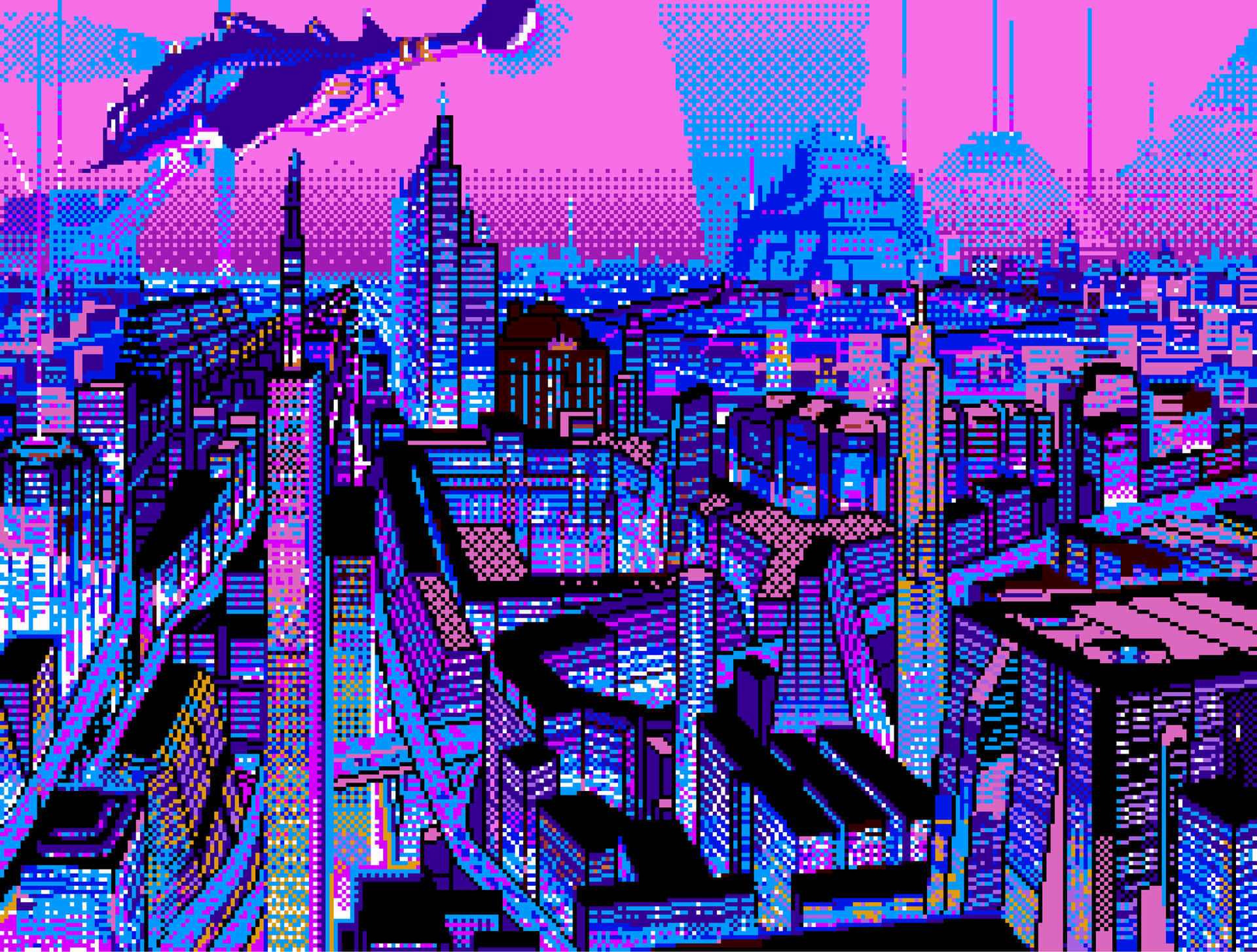
WHAT IS "THE GOD ANIMA" TRYING TO BE?
So, does it not make sense to say I wrote a "Cyberpunk story"? Well, on the one hand, that's what I tried to do. I wrote about outlaws, roaming the gritty underground of a colourful city, struggling against corporate overlords. Seems like Cyberpunk to me.
But then, I am a defiant soul, and I do not like to fit into boxes. On some level The God Anima was conceived with the direct intent to confuse genre purists.
When I did the rounds, trying to advertize the story to "would-be readers", I passed through the subreddit dedicated to Cyberpunk. Turns out that this is a place where people find joy in sorting posts into two boxes, one labeled "true Cyberpunk - belongs here" and another labeled "not Cyberpunk - is misplaced here". I think they believe that the community is - or could be - undivided on the shape of these boxes. I don't believe such a thing is possible.
Anyhow, it seems that my story might be something entirely different.
The aesthetic of "Iridescent City" was conceived when I toyed with the thought of "ruining" a fantasy setting with the introduction of technology. Could I do this in a world without something as fundamental to technology as electricity? Of course! After all, magic and technology are narratively indistinguishable. Simply turn "magic" into a mundane, everyday element, so common as to be imperceivable.
I was deeply fascinated by how that is exactly what has happened in real life. Why do we not think smartphones are "magic"? The quite heartbreaking (and fascinating) answer is "because we're used to them".
The result is a traditional fantasy setting - complete with dedicated design of races, a reality with a foundational fabric colored by a unique mythology, and a system of magic with rules in direct contrast to real life. Yet, I have "neutered" it, by compressing it into a world-order quite like our own. To be honest - our current reality is plenty "Cyberpunk".
I like to think this says a few things about what we label as "magic".
And perhaps this "otherworldly" foundation of the story means it's "not technically Cyberpunk". But for all my fascination with technicalities, discussions of genre fall short of what's of real importance here: this was what I was interested in writing, and perhaps you would be interested in reading it.
Comments
Post a Comment